









Your cart is empty.
Continue shoppingFelt and wool slippers are often sold side by side, described in almost identical terms: natural, warm, breathable. But they feel different underfoot, wear differently over time, and suit different feet and homes. Choosing the right one comes down to understanding what each material actually is.
Here is a plain-English guide, followed by the OmaKing models that fit each type.
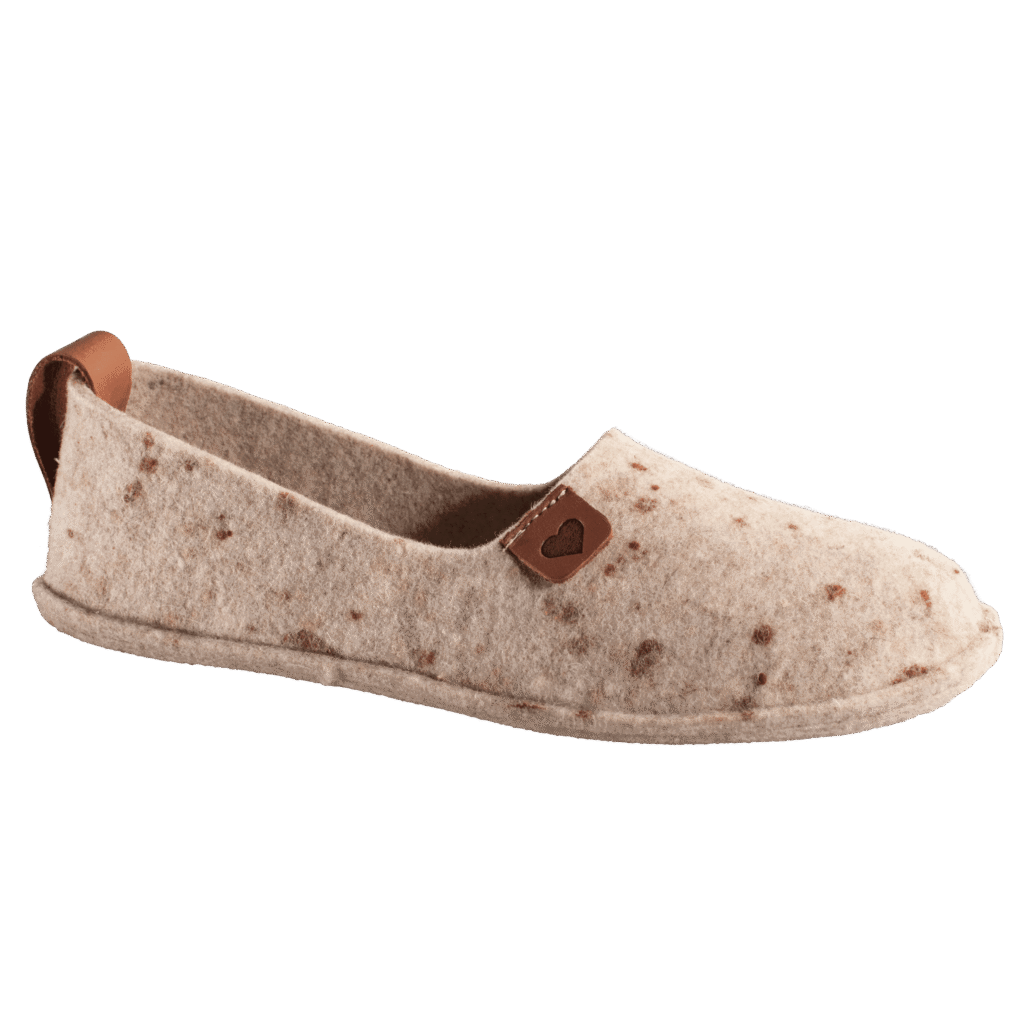
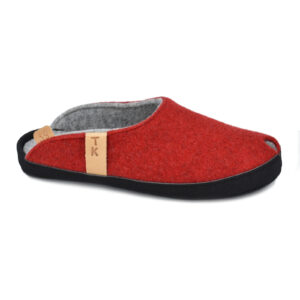
Felt: firm and breathable
Structured, supportive and comfortable year-round. Toku Beige, natural felt with a stain-proof rubber sole.
Shop Toku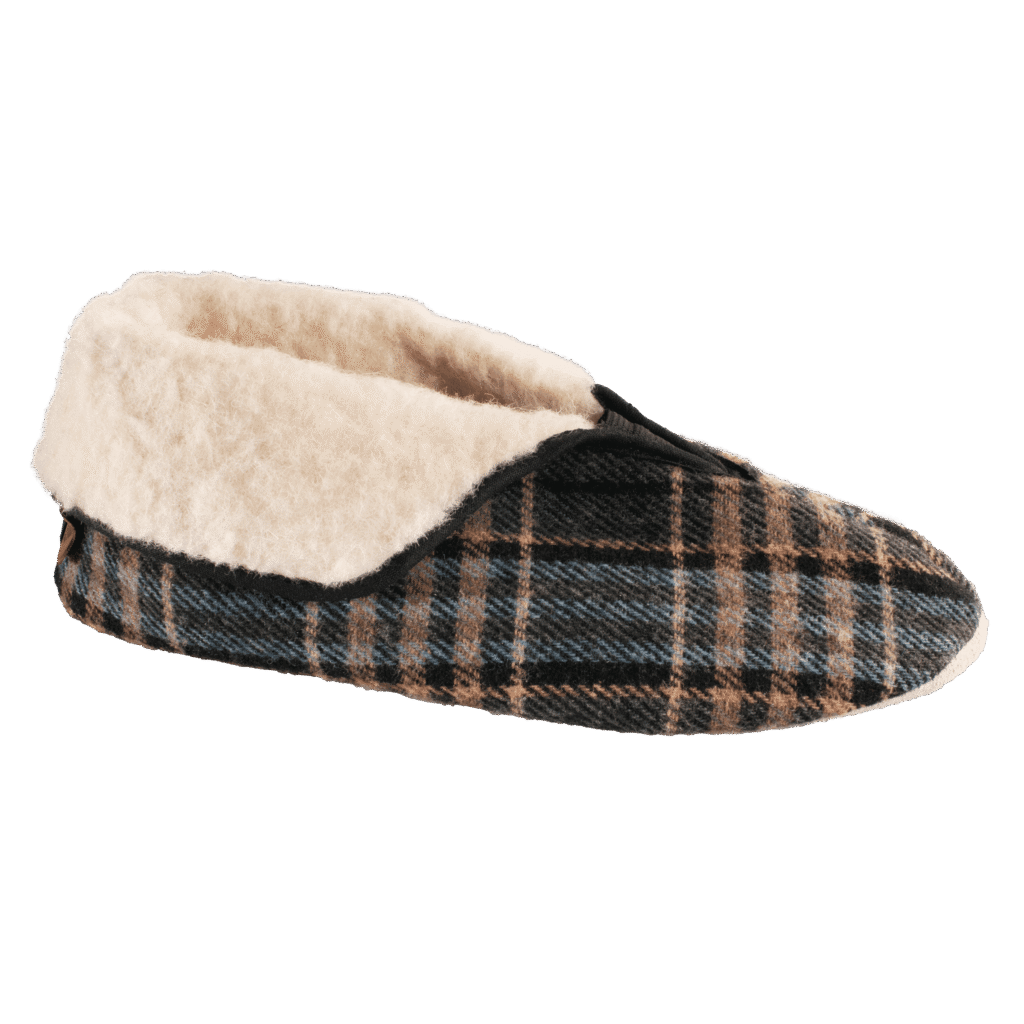
Wool: soft and warm
Cushioned and cosy for cold homes. Trolla, closed-style with 100% lambswool lining.
Shop TrollaThe material difference: what felt actually is
This is the part most guides skip. Felt is not a separate material from wool. It is wool, processed in a particular way.
To make wool felt, raw wool fibres are exposed to heat, moisture and friction. The fibres interlock and compress into a dense, seamless structure that is completely different from woven or knitted wool. It cannot unravel, it holds its shape under pressure, and because the fibres are so tightly bonded it resists wear, moisture and odour in ways that loosely woven wool does not.
Traditional wool slippers, with a woven textile upper or a soft lambswool lining, use wool in a less processed form. The fibres keep more loft and softness, which makes them warmer and cushier underfoot, but also more likely to compress over time.
Felt slippers: structure, breathability and year-round wear
Felt slippers are firmer than they look. The compressed structure gives them a solid feel underfoot, supportive without being rigid, and they do not collapse with wear the way a soft slipper does.
Temperature regulation. Wool felt works in both warm and cold conditions. The air pockets trapped in compressed wool fibres insulate in cold rooms and let heat and moisture escape in warmer ones. Many synthetic slippers trap heat and sweat; felt does not.
Odour-resistant. Wool contains lanolin, a natural wax with antibacterial properties, and the compressed fibre structure of felt gives odour-causing bacteria little room to settle. Aired regularly, felt slippers stay fresh for a long time between washes.
Sole types. OmaKing felt slippers all have rubber soles, which give traction on hard floors and extend the life of the slipper. Felt slippers sold without rubber soles feel closer to walking barefoot, but wear through faster.
OmaKing felt slippers
- Toku Beige: natural felt, stain-proof rubber sole, machine washable at 30°C, sizes 36–42
- Toku Grey: the same construction in a cooler tone, machine washable at 30°C
- Pelsi Beige and Pelsi Dark Grey: broader size range (35–48), machine washable at 30°C
- Mustja: natural felt upper, lining and insole, thin rubber sole, sizes 35–48
- Halla Felt: clean silhouette, rubber outsole, machine washable at 30°C, sizes 35–48
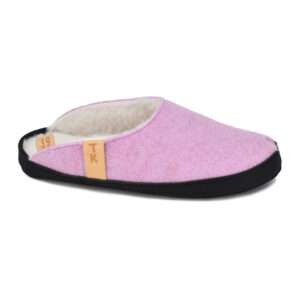
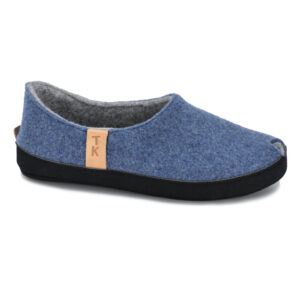
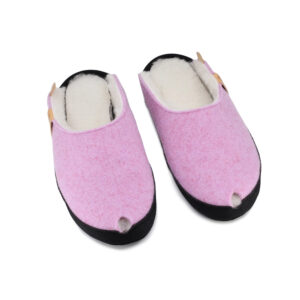
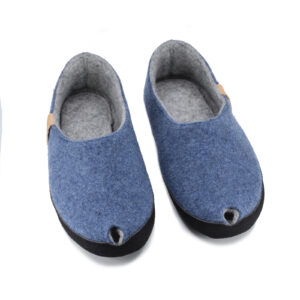
A different kind of felt: Öko-Toku. Öko-Toku Pink and Öko-Toku Blue are made from felt produced from recycled plastic bottles rather than wool, so the wool properties above do not apply. They share the felt range’s structure and rubber sole, and they are the most sustainable option in the OmaKing line.
Wool slippers: warmth, softness and cold-weather comfort
Wool slippers in the traditional sense, with a woven textile upper, lambswool lining or wool insole, are softer and warmer than felt. The loosely packed fibres trap more air and create a cushioned, enveloping feel that felt cannot match.
Lambswool is exceptionally warm for its weight. Its natural crimp creates extra air pockets, and it wicks moisture away from the skin, keeping feet dry during long wear. For cold homes, stone floors, or people who simply run cold, lambswool is hard to beat. The trade-off is that lined wool softens underfoot over time in a way felt does not.
OmaKing wool slippers
- Ruutsi: woollen textile upper, 100% sheep’s wool lining and insole, velvety outsole, sizes 35/36–49/50
- Trolla: closed style, 100% lambswool lining, latex insole, suits a high instep, machine washable at 30°C, sizes 36–47
- Trolla Beige: as Trolla, with a velour outsole, machine washable at 30°C
- Pähni Beige: 100% lambswool upper and lining, warm and breathable, machine washable at 30°C, sizes 35–48
Felt with wool lining: the best of both
Several OmaKing models pair a felt outer with a wool or lambswool lining. The felt gives structure and durability; the lining adds warmth and softness. For most people this is the most versatile choice: long-lasting, and noticeably warmer than felt alone.
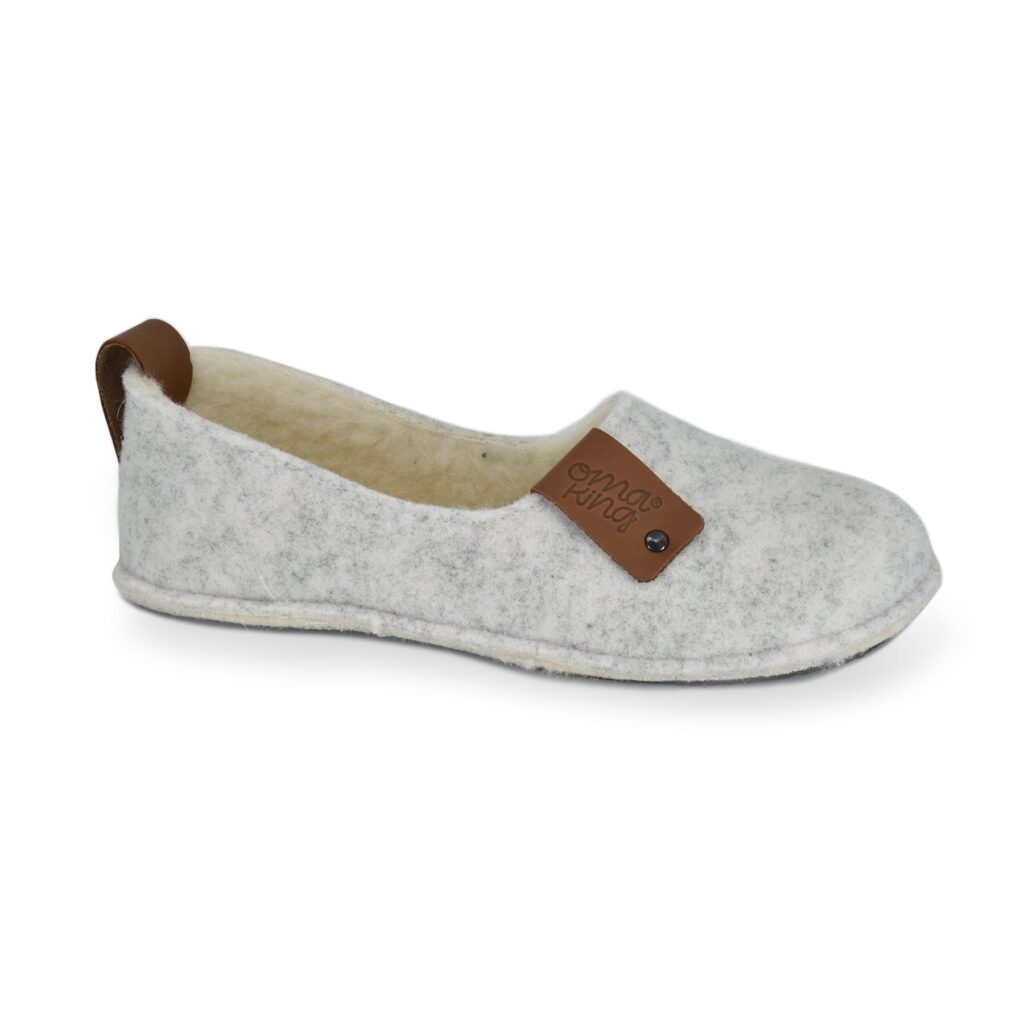
Toku Lambswool White
Natural felt upper, lambswool lining, rubber sole. Machine washable at 30°C.
Shop Toku White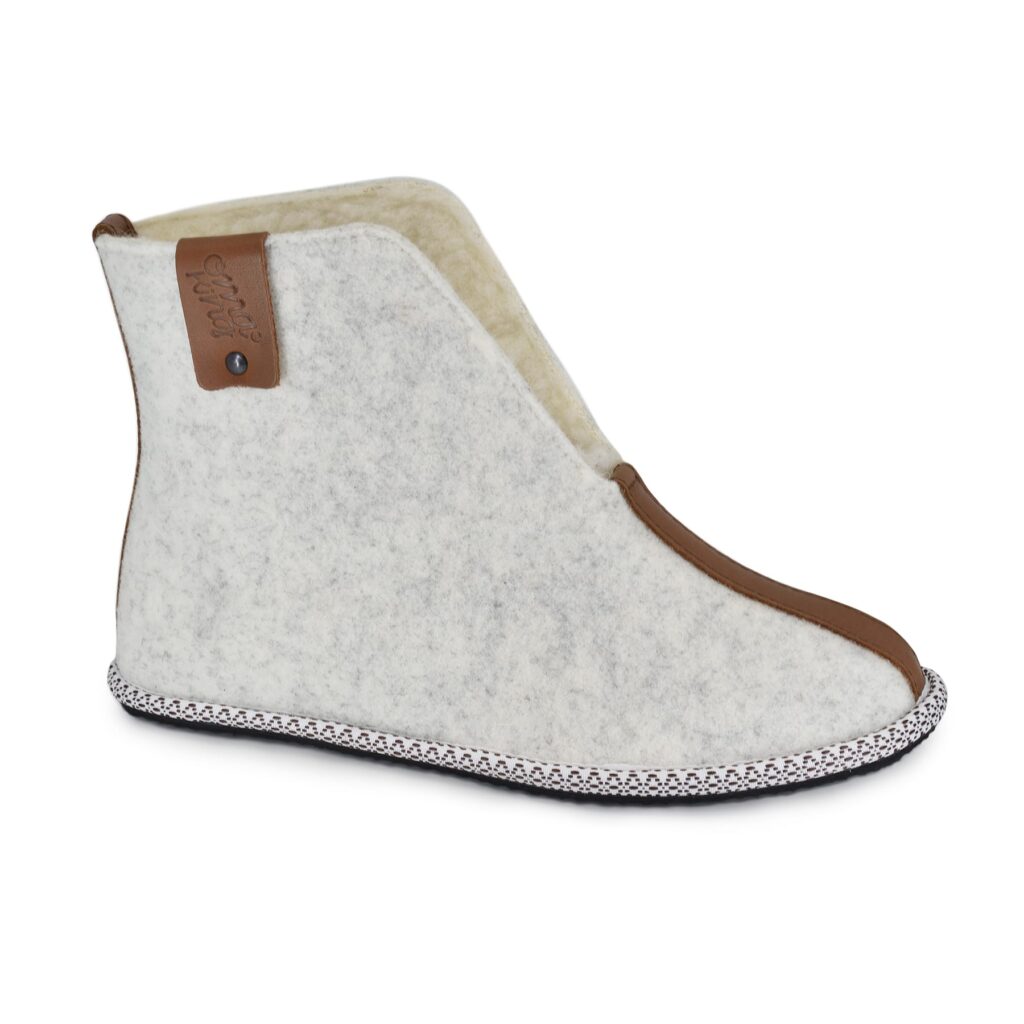
- Jugu: natural felt upper, sheep’s wool lining, floral embroidery, handmade, machine washable at 30°C
- Halla Wool: natural felt upper, lambswool lining, machine washable at 30°C, sizes 35–48
How to choose
| Felt | Wool | Felt + wool | |
|---|---|---|---|
| Warmth | Moderate, year-round | High, especially cold weather | High, year-round |
| Feel underfoot | Firm, structured | Soft, cushioned | Balanced |
| Durability | Excellent | Good | Excellent |
| Breathability | Excellent, moisture-wicking | Good | Good |
| Odour resistance | Excellent | Good | Good |
| Care | Machine washable (most) | Check label | Machine washable (most) |
| Best for | All-day wear, warm homes | Cold rooms, maximum warmth | Most buyers |
- Choose pure felt if you wear slippers most of the day, live in a heated home, or want something you barely need to think about.
- Choose wool or lambswool if your home is genuinely cold or you want maximum cushioning. Trolla and Pähni are the warmest OmaKing models.
- Choose felt with wool lining if you want one pair that works across seasons.
- Choose Öko-Toku if sustainability is your priority.
Shop OmaKing slippers
Natural felt and lambswool slippers, made in Estonia. Free EU & UK shipping over €150.
-
 Just Arrived
-
 Just Arrived
-
 Just Arrived
-
 Just Arrived
-
 Just Arrived
-
 Just Arrived
-
 Just Arrived
-
 Just Arrived
Common questions
In the OmaKing range, the lambswool models are the warmest: Trolla has a 100% lambswool lining and Pähni a 100% lambswool upper and lining. For warmth with more breathability, felt-and-lambswool combinations like Toku Lambswool White or Villa are a good balance.
Yes. All OmaKing felt slippers have rubber soles, which grip on wood, tile and stone. Felt slippers without rubber soles can be slippery on smooth floors.
Yes. Wool felt regulates temperature: it insulates in winter and lets heat escape in summer, which makes it one of the few slipper materials suited to year-round wear.
About OmaKing
OmaKing has been making footwear in Estonia since 1927, using natural felt, lambswool and recycled textiles chosen for longevity rather than trend. Browse the full OmaKing range or shop women’s slippers.
Leave a Reply